In this article
Getting high ranks on search engines is only possible when you adhere to the quality criteria. Your blog, article, research and any other content will get into trouble if it does not follow this principle or if you attempt to take shortcuts with wrong techniques. The result will be a penalty from Google that prevents your website from growing further. And, it becomes a common issue for writers and content creators.
To help them we created this guide. We will discuss all the reasons behind search engines' penalties and share practical, easy-to-follow solutions to avoid them.
So, learn with us and make your online content publishing valuable.
Common Issues That Force Google to Penalize Your Website
Google takes several factors into account before penalizing any website. You must look into the issues discussed below to understand what mistakes you might be making while jotting down any kind of content:
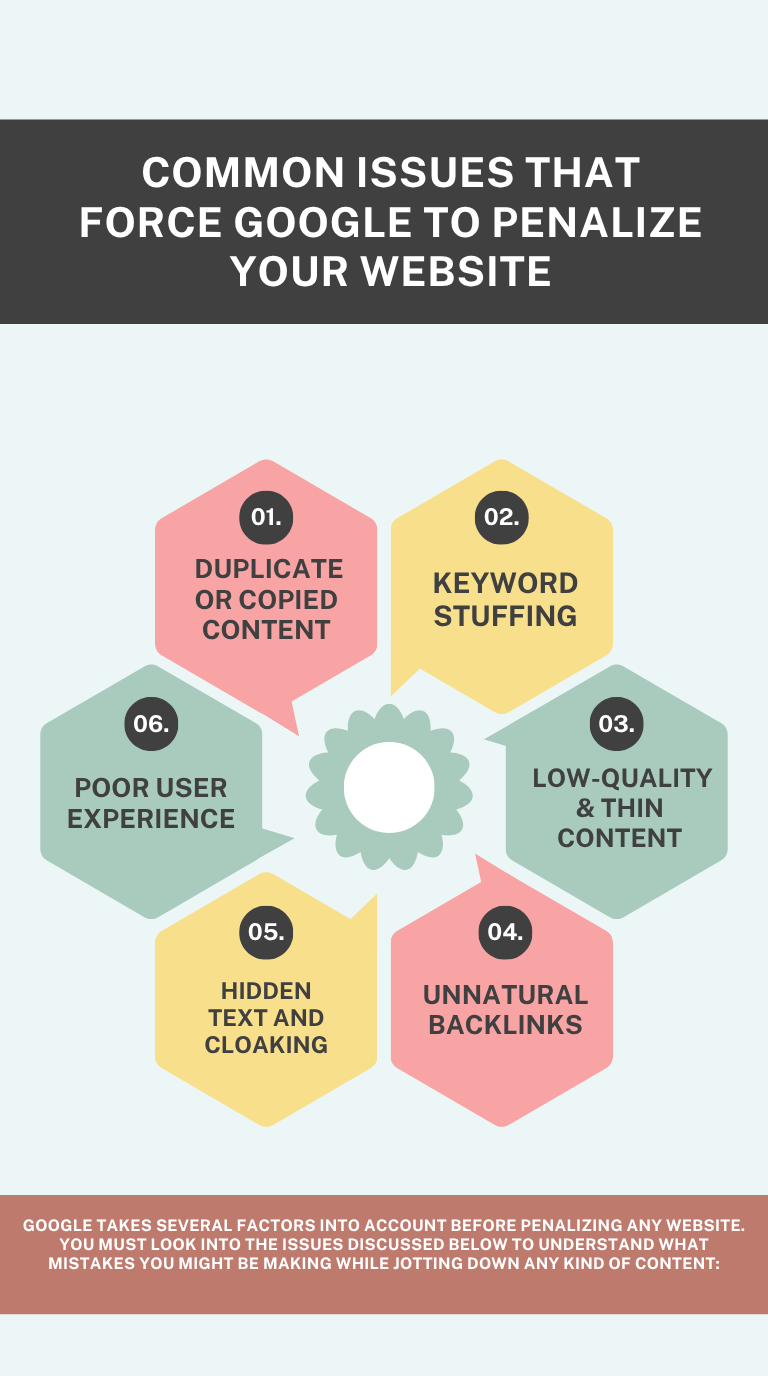
1. Duplicate or Copied Content
One of the biggest reasons behind a drop in ranking on SERPs is content duplication. If your blog has copied material from other websites or repeats the same content across multiple pages, Google sees it as low-value. This confuses search engines about which version to rank. Even unintentional duplication, like similar product descriptions, can harm your site. Search engines, users, and everyone prefer original content because it adds value. When your blog lacks uniqueness, it loses credibility and authority.
2. Keyword Stuffing
Keywords are critical, but excessive use can be counterproductive to your content. When the content feels forced, it becomes less readable and frustrates readers. The search engines have become so intelligent that they no longer rely solely on word repetition to interpret context. If your content appears over-optimized, your website may be labeled as spammy and low-quality. Thus, rather than emphasizing word repetition, focus on clarity.
3. Low-Quality & Thin Content
The issue of thin content revolves around web pages that contain minimal or no substantial information. Writers or content creators who produce blog articles of very few words and lacking in depth fail to satisfy their readers' needs. The search engine ranks websites based on the value of their content, which answers real-world issues. If you write blog articles with no substance or unique information, your website will not perform as expected. This kind of negligence harms your online reputation.
4. Unnatural Backlinks
It is important to remember that links will help your content only when they do not decrease your website’s authority. For example, links from your website to non-relevant pages or websites can create an unprofessional impression with search engines. In addition, broken or poor-quality links may have the same impact on your website's reputation and trustworthiness. One more mistake concerns the choice of link source. Links should come from different sources to ensure their diversity.
5. Hidden Text and Cloaking
Cloaking involves trying to fool search engine algorithms by hiding content or presenting different pages to both users and search engines. As far as Google is concerned, such activities violate its policies. You stand a chance of getting into trouble for using this technique. The search engine does not appreciate any form of deception. This inappropriate approach might help you in the short run, but it will do harm to you in the long run.
6. Poor User Experience
User behavior significantly influences the evaluation process search engines use. Your web pages attract visitors, but they leave shortly after without engaging. This means that your content does not fully meet their demands. Factors such as low time spent on a page, fewer clicks, and lower user engagement directly influence rankings. It often occurs because a website's content lacks engagement, visual appeal, and coherence. The accuracy of the provided information might still be great; however, its presentation matters as well.
How to Avoid These Issues?
Avoiding penalties is not difficult if you follow the right practices.
Here are the practical solutions to overcome the aforementioned issues and save yourself from Google’s penalties:
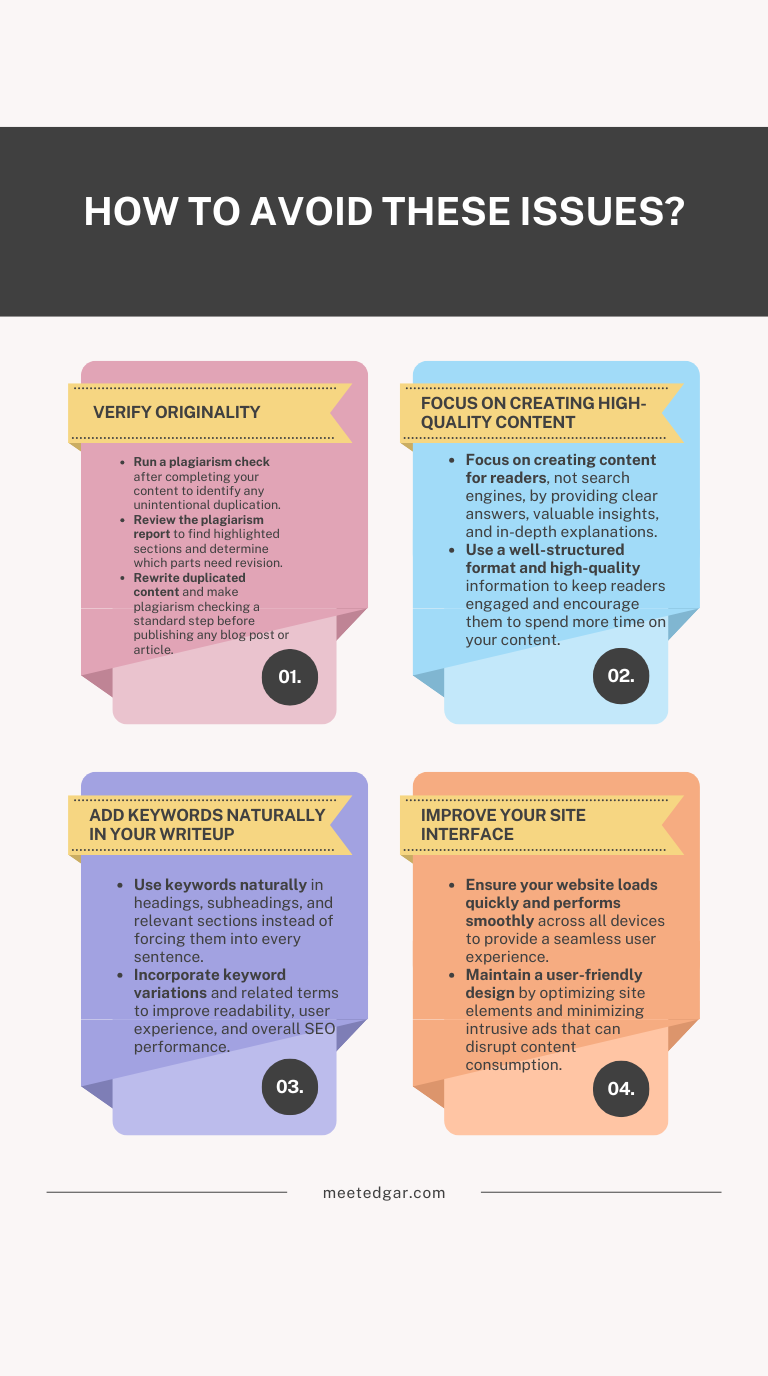
1. Verify Originality
Sometimes we unintentionally use others ideas or content in our writing that cause content duplication. To avoid it, you need to run a plagiarism check. Hence, after completing your write-up, check its originality using an advanced plagiarism detector. All you have to do is paste your text or upload the file into the tool, and it will scan the entire web to find similarities.
It will provide you with a detailed report showing the plagiarized and unique text scores. You can review all highlighted phrases and figure out the sections that need to be fixed. Must implement this technique every time you write a blog or any other content.
2. Focus on Creating High-Quality Content
Writing high-quality and useful content is the ultimate aim of every writer. It is important that you do not create content for Google but for your readers. You must provide clear answers and offer in-depth explanations of various issues. Well-structured, proper formation, and helpful insights will make a blog or article look compelling.
Since maintaining content quality also requires careful review before publishing, using a Free AI checker tool can help writers identify whether their content contains a significant amount of AI-generated text and make informed improvements where needed. Useful, high-quality information always holds a visitor's attention for a long time.
3. Add Keywords Naturally in Your Writeup
Keywords should be used naturally and meaningfully. Avoid forcing them into every sentence. Instead, place them where they fit logically, such as in headings or important sections. Use variations and related terms to maintain balance. This makes your content easier to read and more engaging. Google understands context better through its advanced, so there is no need to overuse keywords. A natural approach improves both user experience and SEO performance.
4. Improve Your Site Interface
Having an efficient, smooth, and fast-loading website is the very first thing that you should do if you have a blog. All the elements present on it need to load really fast, including its content and icons, and also needs to be accessible on all types of devices. You should pay attention to all the aspects of your website and ensure they are user-friendly. There should be no ads that could hinder the process of reading.
Conclusion
Google penalties are often the result of avoidable mistakes. It’s essential to understand what things can trigger penalties from this search engine giant. By understanding the issues, you can easily avoid them before publishing any blog post.